Feb 13, 2026
How to Choose the Right Attic Ladder (and Safer, More Space-Saving Alternatives)
How do I choose the right attic ladder?
Choosing the right attic ladder comes down to three things: how often you’ll use it, what you’ll carry, and how much space you can realistically spare for access.
Start by deciding how your attic/loft will be used:
Occasional storage (a few times a month)
Frequent storage (weekly)
Regular-use loft/mezzanine (daily)

Occasional storage can work with a simpler pull-down attic ladder. But if you’re using the space regularly (or you simply want it to feel safe and “part of the room”), you’ll usually want something more stable underfoot, easier to operate, and easier to live with visually.
This guide will help you compare the main attic ladder types (including side-fold options), the safety features that matter, and what to measure before you commit.
Step 1: Pick the right type of attic access
Most people start with a traditional pull-down attic ladder because it’s familiar. But in real homes, tiny homes, hallways, studios, kid-friendly lofts, the “best” option often depends on where the ladder needs to go when it’s open (and where it needs to disappear when it’s closed).
Pull-down attic ladder (ceiling-mounted)
Best for: occasional attic storage where you have a clear “drop zone” underneath.
Pros
Packs away into the ceiling hatch
Common and widely available
Cons
Needs a clear area below to deploy
Can feel bouncy or awkward underfoot depending on the ladder style
Visually “utility-like” in a design-led interior
Fixed ladder (always open)
Best for: garages/workshops or spaces where the ladder being “always there” isn’t a problem.
Pros
Simple and always accessible
Cons
Permanently takes up floor space
Often visually dominant in small rooms
Can clash with door swings, furniture layouts, walkways
Side-fold ladder (wall-mounted, folds flat)
Best for: small spaces where you want access ready to go, but not in the way.
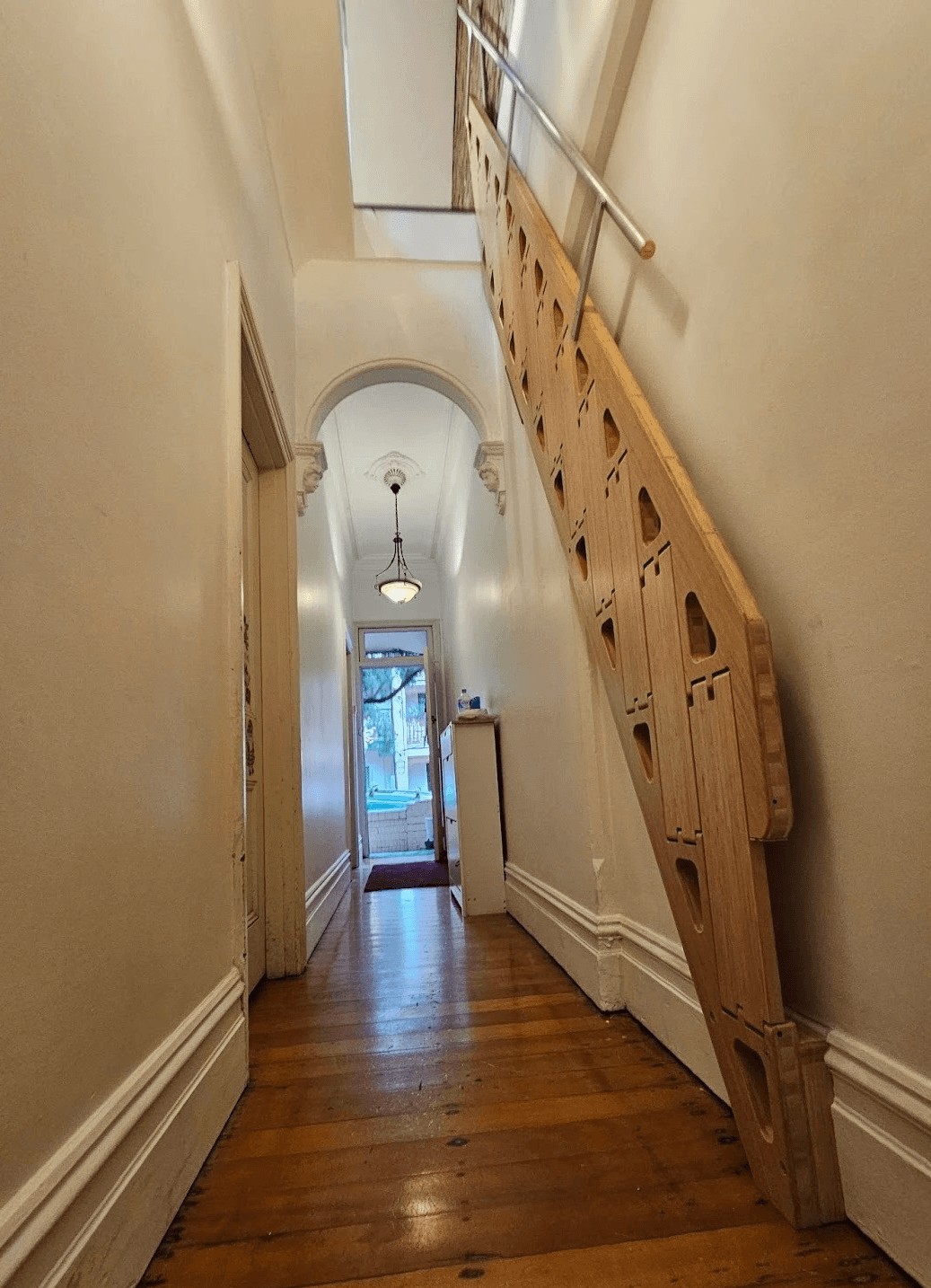
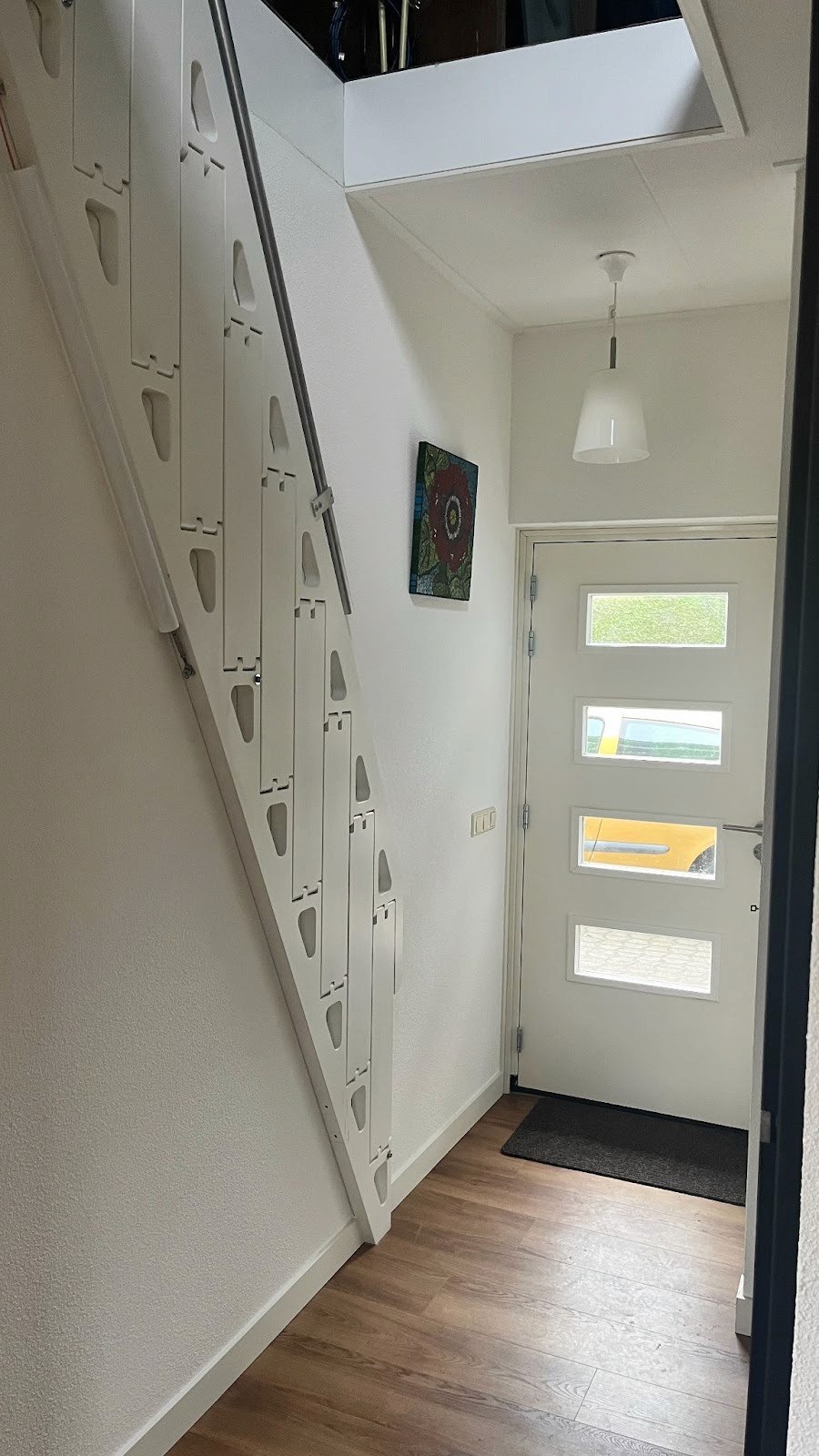
A side-fold ladder stores to the side against a wall rather than dropping down from the ceiling. For small spaces, that can be a game changer because you get:
Stable access when open
A slim stored profile when closed
More control over layout (where it swings, what it blocks)
A lower angle than attic ladders meaning a more gentle ascent/descent.
Bcompact’s Prefab Side-Folding Ladder is positioned as a “pull-down attic ladder replacement” and folds to a compact wall profile, with options like left or right fold and stain finishes to suit your room layout.
Folding stairs (more stair-like, still space-saving)
Best for: daily use where comfort matters, but you can’t dedicate the footprint of fixed stairs.
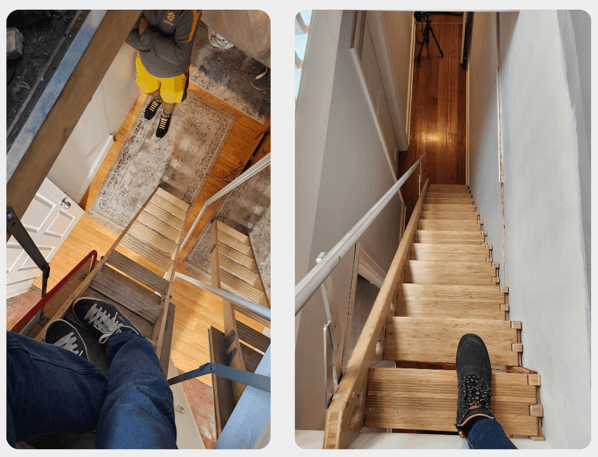
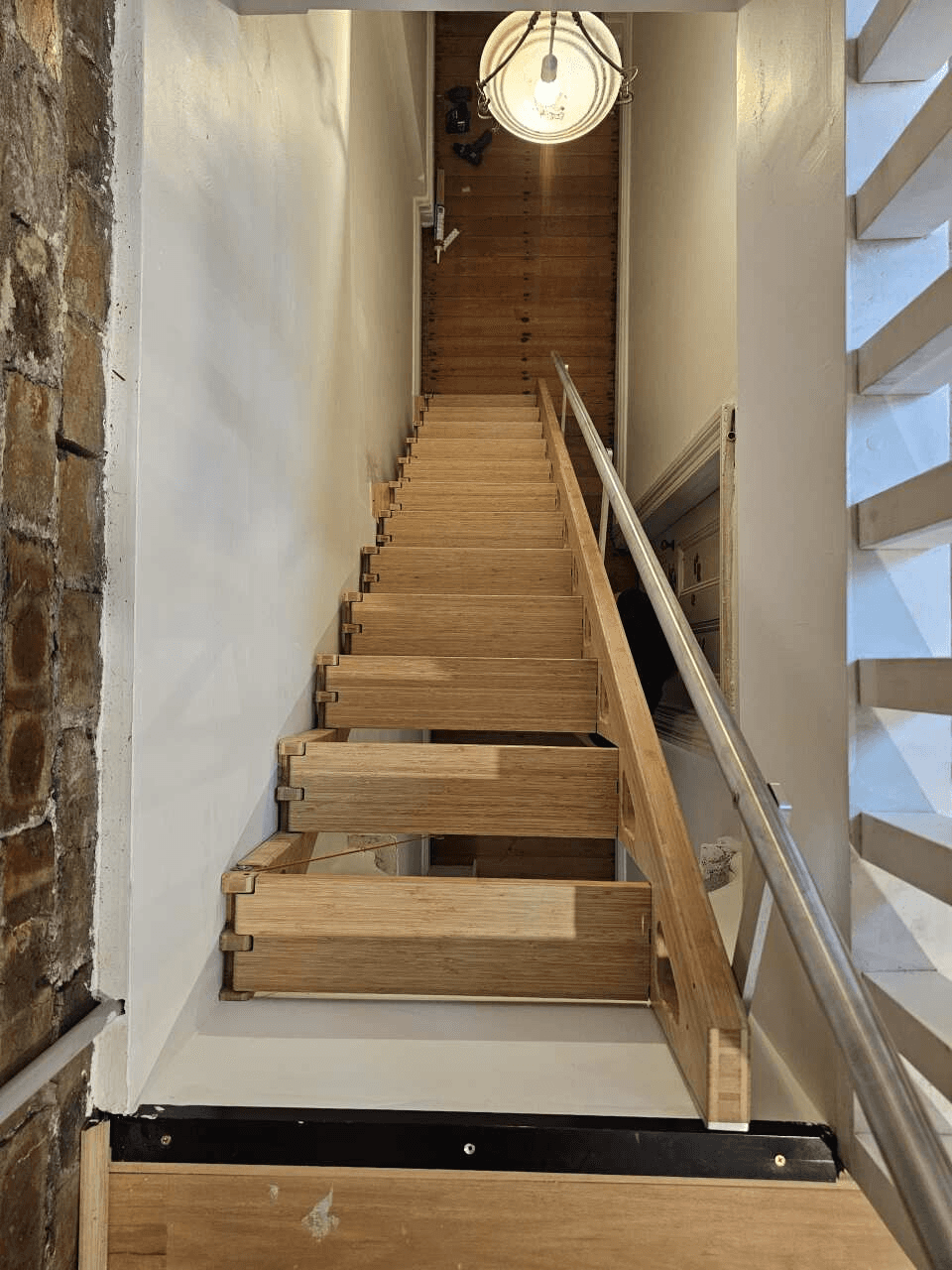
This is often the “best of both worlds” for sleeping lofts and mezzanine offices: more comfortable treads and geometry than a ladder, but designed to fold away when not in use.
If you’re deciding between a ladder and a stair, Bcompact’s own FAQ frames it simply: limited run length = ladder (steeper angle, shorter run); more space available = stair (lower angle, more treads).

Step 2: Ask the two questions most people miss
1) “Where will the ladder live when it’s OPEN?”
In tight homes, the open position matters just as much as the stored position.
If the ladder will open into:
a hallway
a doorway
a main walkway
a living room “circulation path”
in front of a cupboard
…then a pull-down ladder (which needs a clear drop zone below) can become a daily annoyance.

Side-folding helps because it opens from the wall and can be planned around doors and walkways. With Bcompact’s ladder, you can choose left-fold or right-fold, which lets you match the ladder swing to your layout instead of fighting it.
2) “Will I need to operate it from the TOP as well as the BOTTOM?”
Many traditional attic ladders are designed around being pulled down from below.
If you’ll use the attic/loft regularly, it’s worth prioritising an access system that can be managed comfortably from both ends. Bcompact’s side-fold approach is designed for repeat use and everyday usability (with spring-loaded folding for lightweight operation).
The safest attic ladder options: what to look for
“Safe” is a combination of geometry, stable footing, reliable locking, and correct installation. When comparing attic ladders, look for:
Treads, not rungs: treads feel more secure and are easier on bare feet.
Non-slip surfaces: especially important in socks or for kids/guests.
Handrail support: improves confidence and reduces slips.
A positive locking/catch mechanism when open: less movement, less bounce.
A secure stored position: stops movement when folded away.
A clear landing/step-off at the top: so you’re not stepping onto a narrow edge.

Bcompact’s configurator makes this selection practical because you can add extras like handrails and locks while you’re designing the ladder/stair for your space.
And if you’re considering prefab, Bcompact’s Prefab Side-Folding Ladder lists non-slip treads, optional handrail, and a spring-loaded side folding operation, features that directly support everyday safety and ease of use.
Important note: building requirements vary by region and application. For habitable mezzanines or regulated spaces, check local requirements with a qualified building professional.
Step 3: Get your measurements right (the shortlist checklist)
Before you choose a model, or start an online configurator, measure these:
Floor-to-floor height (finished floor to finished floor)
Opening/landing location at the upper level (where you step off)
Clearance below (door swings, walkways, furniture, light switches)
Available run length (how much footprint you can spare)
Preferred fold direction (left-fold or right-fold, based on your layout)
Bcompact’s configurator is built around entering your exact floor-to-floor height and adjusting angle options to suit your space.
If you’re looking at prefab specifically, note that prefab ladders suit a defined height range and generally can’t be customised to other heights, so checking the height range early is key.
Pull-down attic ladder vs side-fold ladder vs folding stairs
Here’s the real-world comparison most homeowners need:
Pull-down attic ladder
Best for occasional access
Needs a clear drop zone below
Often not the nicest daily-use experience
Can feel visually bulky in living spaces
Side-fold ladder
Stores flat to the wall (great for flexible rooms)
Can be set up to suit the layout (including left or right fold)
Often more “liveable” for frequent use
Great when you want the ceiling line clean above
Folding stairs
Most comfortable option short of full fixed stairs
Better for daily use (loft bedrooms, mezzanine offices)
Still space-saving because it folds away
Often chosen when you want access to feel more like a “real staircase”
If your attic ladder is for more than “occasionally grabbing a suitcase,” it’s usually worth looking beyond traditional pull-down designs.
Custom vs prefab: which attic ladder path should you take?
Choose prefab if you want:
A faster, more straightforward option
A standard height range that matches your space
A simple, budget-friendly upgrade from a pull-down attic ladder
Bcompact’s prefab ladder page shows clear specs (height range, folded profile, run length requirement, left/right fold option, handrail option).
Choose custom if you need:
A ladder/stair fitted precisely to your space
Control over angle, configuration, and add-ons
A solution that looks and feels “built-in”
Bcompact explicitly references custom being designed to fit your exact space within 5 mm accuracy.
And for extra peace of mind, Bcompact has announced a lifetime warranty on their custom folding stairs and ladders (terms and conditions apply).
Cost to install an attic ladder: how to think about it without guesswork
Installation costs vary widely depending on the access opening, structure, and finish work. The most useful way to budget is to split it into:
The access system itself (ladder or stair)
Site prep / carpentry (hatch framing, landing work, wall reinforcement)
Finishing (trim, painting, flooring adjustments)
A good next step is to gather your measurements and photos, then use the online configurator or quote request pathway to get a product direction—and have your builder/installer quote the on-site work separately.
Installation & maintenance basics (keep it practical)
Plan the access zone early: avoid clashes with doors, windows, lighting and furniture layouts.
Follow the relevant datasheet: fixings and clearances matter for any moving access system.
Check hardware periodically: fasteners and moving parts should remain secure over time.
Care for bamboo simply: wipe with a soft cloth; avoid harsh or abrasive cleaners.
If outdoors: ensure the correct protective finish is used (Bcompact notes adapting to outdoor use with suitable sealing).
Why Bcompact is different
Patented side-folding ladder and stair systems (original inventor, worldwide patents)
Australian family-run design and manufacturing
Bamboo finish for a warm, modern look in living spaces
A simpler selection process via the online configurator, including add-ons like finishes, handrails and locks
Lifetime warranty on custom folding stairs and ladders (T&Cs apply)
If you’re choosing attic access for anything more than “occasionally grabbing a storage box,” it’s worth selecting a system that feels stable, looks good, and doesn’t steal your floor space.
Start with your floor-to-floor height, a couple of photos of the access area, and a note about doorways/walkways nearby. Then explore folding ladders or folding stairs via the online configurator, or submit a get a quote request so the Bcompact team can help you compare the best option for your layout.