What is a compact folding ladder?
A compact folding ladder is an access ladder designed to give you safe, repeatable access to a loft, mezzanine, storage platform or attic — without permanently eating up valuable floor space.
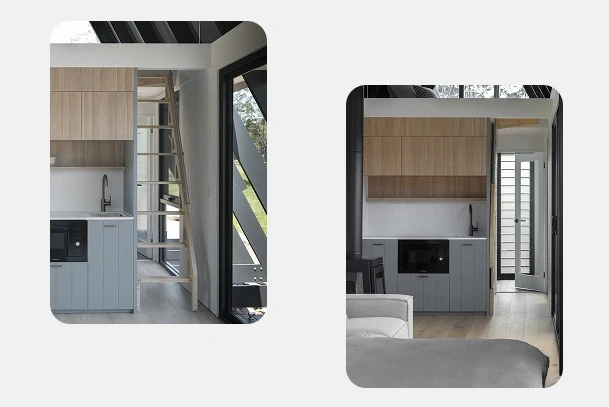
Instead of staying in place like a fixed ladder (always there) or a bulky pull-down attic ladder (that drops into the room), a compact folding ladder folds away when you’re not using it. With a side-fold design, the unit folds flat to the wall so the area underneath can be used again (think: clear walkways, furniture placement, or a door swing that isn’t blocked).
At Bcompact, our compact ladder designs are built around a patented side-folding concept and warm bamboo aesthetics — so the ladder can be both a functional access solution and a feature in the room. And because every space is a little different, Bcompact can customise the ladder to fit the space within 5mm accuracy for a cleaner, more confident install.
Key benefits (why people choose compact folding ladders)
Save usable floor space: reclaim the footprint once access is finished.
Locking/security when open: a catch plate and bolt mechanism that holds the ladder in its “in-use” position.
Handrail options: especially important for kids, senior users, or frequent daily access.
Locks and secure storage: helps prevent unwanted movement when folded (and can add peace of mind in family homes).
Load rating: check the Safe Working Load (SWL) on the datasheet.
Installation method: wall structure and fixings must be suitable for the load and movement.
If your loft is used daily (sleeping loft, office mezzanine, kids’ play loft), the “ready but not in the way” factor is usually the biggest win.
How much space can a compact folding ladder save?
It depends on your floor‑to‑floor height, the ladder angle, and the run length required for comfortable climbing. The simplest way to think about it is this:
When open, you need a footprint (run) so your feet land safely and you can climb at a stable angle.
When folded, you want the profile to be as slim as practical, so the ladder becomes almost flush to the wall.
As a real-world reference, the Bcompact Prefab Folding Ladder range is designed with a fixed 65° angle and a fixed 300mm/11.81” step rise height, and can fold down to a very slim wall profile (as little as 40mm/1.57” wide when folded, with or without a handrail). Always check the specific datasheet for the model you’re considering.
If you want a quick rule of thumb: a good compact folding ladder gives you the stability of a proper access system when open, and a ‘near‑zero footprint’ feel when folded.
How it works (side-fold mechanism, explained simply)
Bcompact folding ladders use a pivot and hinge system that allows the ladder to swing out for use and then fold back in, storing to the side, up against the attachment wall rather than dropping down from the ceiling.
A key advantage of side-folding is flexibility: the ladder can be made to fold to the left or to the right, depending on your layout (doors, windows, cabinetry, walkways, furniture, and how you naturally move through the space).
Side-folding is also particularly useful when ceiling access isn’t practical, or when you want the access point to remain open and uncluttered above (for example, in a loft with a clean ceiling line or lighting you don’t want to interfere with).
On Bcompact’s Full-Fold designs, steps fold neatly against the wall for a tidy finish, using a secure catch/locking mechanism to hold the unit in place when opened.
Are compact folding ladders safe for home use?
A compact folding ladder can be safe for home use when it’s designed for repeated use, installed correctly, and matched to the space and the people using it.
Here’s what to look for when comparing options:
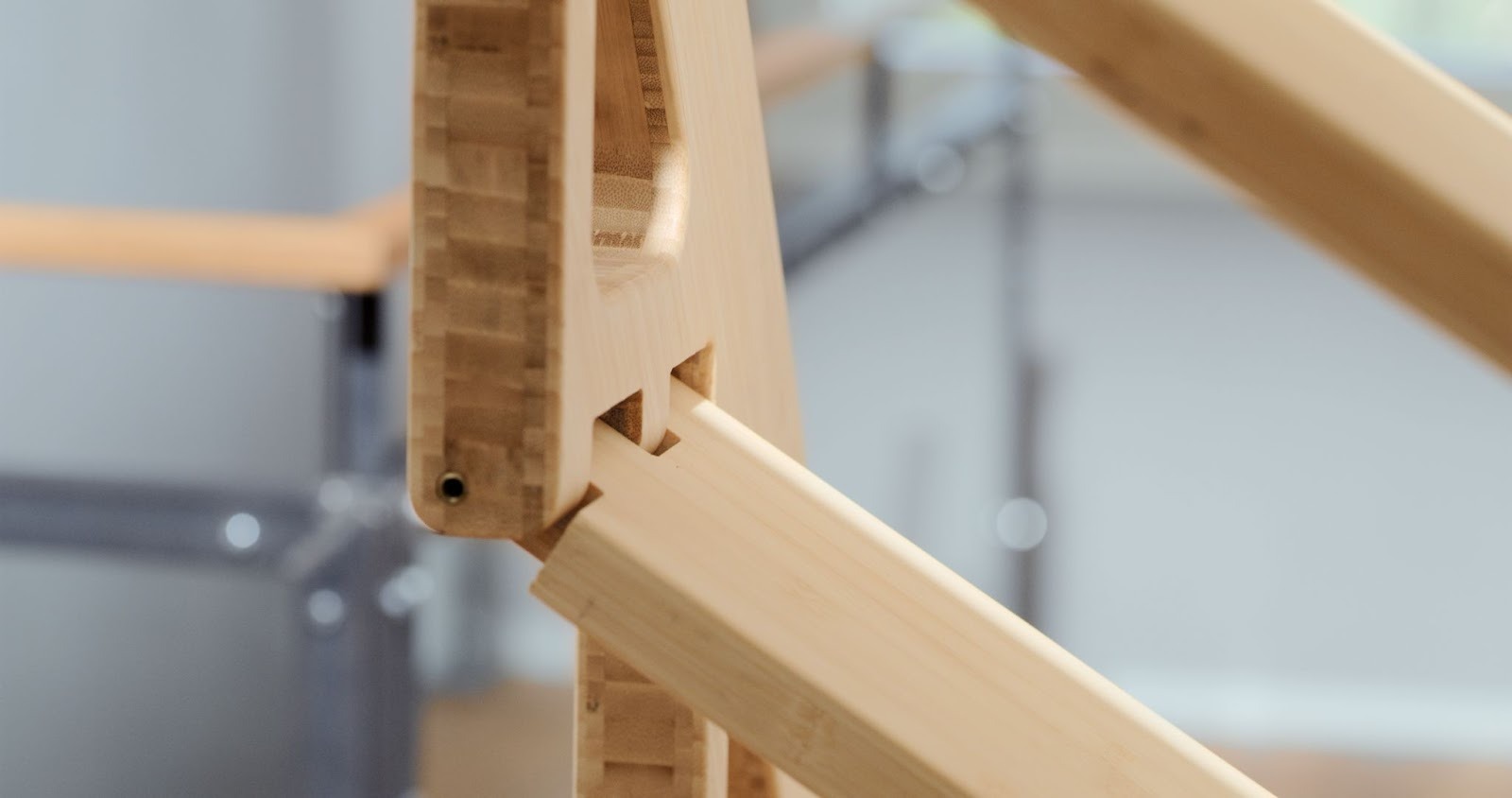
Safe treads: look for step surfaces designed for grip (not smooth rungs).
Locking/security when open: a catch plate and boltmechanism that holds the ladder in its “in-use” position.
Handrail options: especially important for kids, senior users, or frequent daily access.
Locks and secure storage: helps prevent unwanted movement when folded (and can add peace of mind in family homes).
Load rating: check the Safe Working Load (SWL) on the datasheet.
Installation method: wall structure and fixings must be suitable for the load and movement.
Another practical safety difference: unlike many traditional pull-down attic ladders (often designed to be pulled down from above), a side-fold ladder can be operated from both the bottom and the top — which can make everyday up/down use feel more natural and controlled.
For example, the Prefab Folding Ladder datasheet lists a 200kg SWL and a sealed natural bamboo finish with a non-slip rating on tread surfaces (P4 & P5). Your installer should still confirm suitability for your specific wall construction and site conditions.
Best use cases: where compact folding ladders shine
Tiny homes and cabins: maximise multi‑use floor area.
Apartments with loft storage: quick access without clutter.
Home offices / studios with mezzanines: keep the room flexible.
Retail or hospitality fit outs: discreet access to storage or plant platforms (where appropriate).
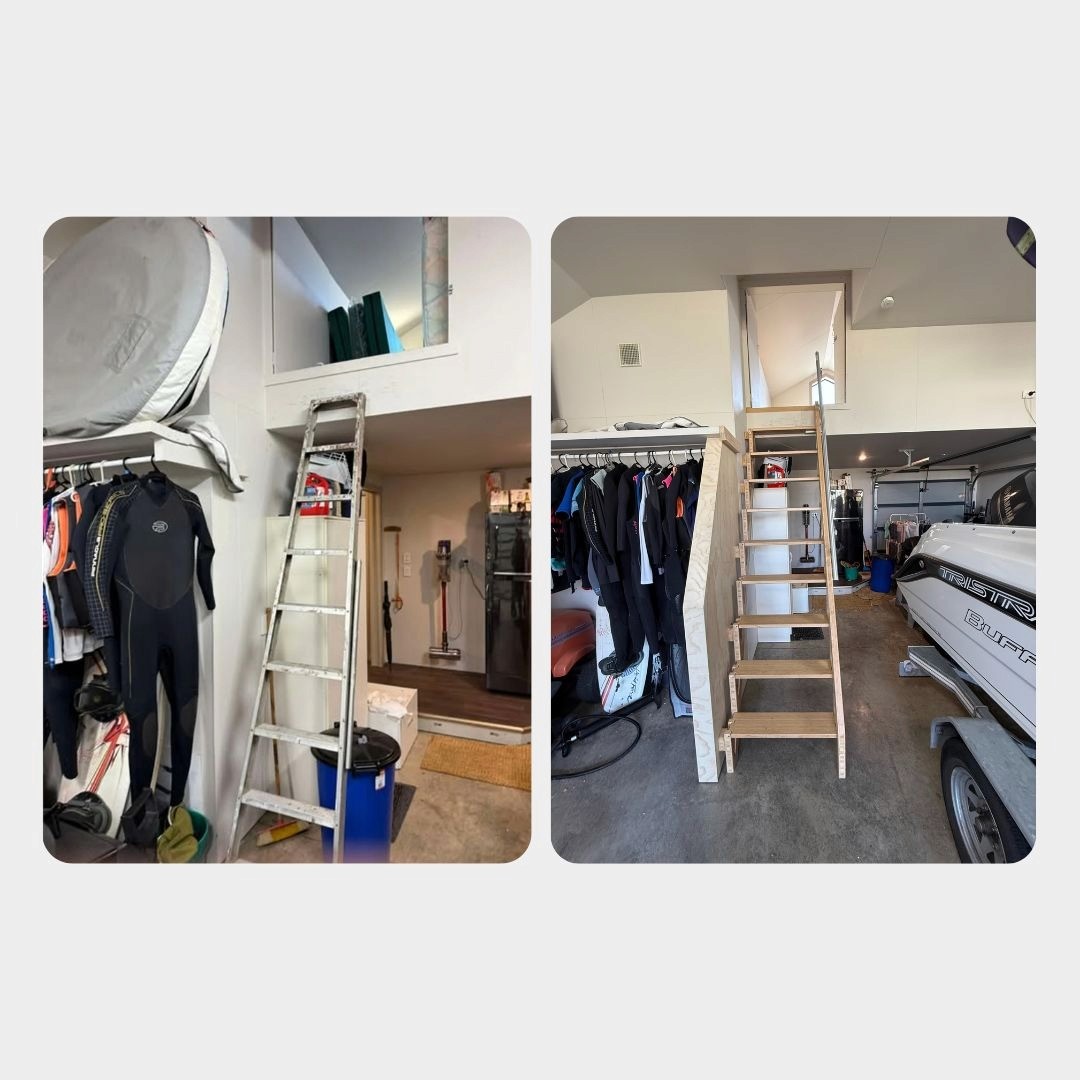
Garages and workshops: reach a storage loft without permanently blocking bays or benches.
If you’re regularly moving furniture, opening doors, or using a space for more than one purpose, ‘fold away’ access becomes a very practical upgrade.
Compact folding ladder vs pull-down attic ladder vs fixed stairs
Choosing the right access is usually a trade-off between comfort, footprint, aesthetics, and how often you’ll use it.
1. Fixed ladder (always open)
Pros: always ready, simple.
Cons: permanently takes up space, can feel steep/industrial, visually dominant in small rooms.
2. Traditional pull-down attic ladder (drops from the ceiling)
Pros: common option for occasional roof/attic storage access.
Cons: needs a clear “drop zone” below to deploy, can feel bulky overhead and unsafe, and is typically designed around being operated from below (often less convenient if you’re using the loft frequently).
3. Side-folding ladder (folds flat to the wall)
Pros: solid, repeatable access when open; minimal footprint when closed; can be designed to fold left or right; can be operated from both bottom and top; visually tidy in living spaces. Can be customised to fit your space seamlessly.
Cons: needs a suitable mounting wall/structure and clearances in the direction it opens.
4. Fixed stairs
Pros: most convenient for frequent traffic.
Cons: biggest space commitment, often not realistic in tiny homes or compact layouts and very expensive.
If your access point is used frequently but you can’t dedicate the space to a full stair, side-folding often sits in the “sweet spot”.
Installation & maintenance basics
Measure carefully: floor‑to‑floor height, opening location, and required clearances.
Confirm wall structure: the ladder must mount to a structurally sound side wall, e.g. plaster/gyprock with wooden studs behind it is considered structurally sound.
Plan around doors, windows and walkways: the side wall must be unobstructed (and confirm whether you want it to fold left or right).
Keep it clean and dry: wipe bamboo with a soft cloth; avoid harsh chemicals.
Periodic check: confirm fasteners and moving parts remain secure over time.
For the smoothest outcome, involve your builder or installer early and work from the relevant datasheet for your chosen model.
Why Bcompact is different
Australian family-run design and manufacturing. The team is always available for support calls or mails!
Original inventor of side‑folding stairs and ladders with worldwide patents.
Bamboo aesthetics with a low‑waste mindset — functional, warm, sustainable and built to last.
Purpose-built systems — not a generic ladder repurposed for living spaces.
Customisation available — including designing the ladder to your fit space within 5mm accuracy.
Conclusion
If you’re planning a loft, mezzanine or attic conversion accessible through a ceiling opening and want to keep your floor space usable, a compact side-fold ladder might be the easiest “small footprint” upgrade you can make.
Share your floor-to-floor height and run length with a quick photo of the access area, and the Bcompact team can point you to the right option — including left-fold or right-fold configurations, optional safety extras like handrails and locks, and prefab height ranges where suitable.