What type of folding ladder is best for small spaces?
The best folding ladder for a small space is the one that gives you safe, comfortable access when you need it — and disappears when you don’t.
In real homes (tiny homes, loft bedrooms, mezzanine offices, hallway attic hatches), the “best” ladder usually comes down to five practical priorities:
o A compact stored profile (folds flat or close to the wall)
o Comfortable treads (so it feels secure underfoot, especially for frequent use)
o A secure lock/catch in the open and stored positions
o A layout that won’t block doors/walkways when unfolded
o A design that suits the room (because in small spaces, you’ll see it every day)
That’s why side-folding ladders are often a strong choice for small spaces: they store to the side rather than dropping down from the ceiling or permanently occupying floor area. Bcompact’s folding ladders are designed specifically to free up floor space while providing safe loft and attic access.
Fixed vs side-folding vs traditional attic ladders (what’s actually different?)
If you’re comparing options, it helps to sort ladders into three common categories:
1) Fixed ladder (always open)
A fixed ladder is always there — which is both its strength and its weakness.
Pros: simple, always accessible
Cons: always takes up space, can dominate a room visually, and can be annoying around doors, circulation paths, and furniture
In small spaces, “always open” often becomes “always in the way”.
2) Traditional pull-down attic ladder (ceiling-mounted)
These are common for occasional roof/attic storage access.
Pros: hidden when closed
Cons: needs a clear “drop zone” underneath to deploy, can feel bulky overhead, and isn’t always the nicest experience for frequent use (especially when you want the access to feel like part of the room, not a utility hatch)
3) Side-folding ladder (wall-mounted, folds flat)
A side-folding ladder opens when you need it and folds back against the wall when you’re done.
Pros: minimal footprint when stored, visually tidy, great for tight layouts
Cons: needs a suitable mounting structure and correct clearances
Bcompact’s folding ladder range is designed as a space-saving alternative for tight spaces and attic access, with options across prefab and custom pathways.
Why side-folding often wins in genuinely small spaces
Small spaces don’t just mean “short run length”. They usually mean competing constraints, like:
o a doorway near the ladder
o a narrow hallway or tight lounge layout
o furniture that can’t be permanently shifted
o limited ceiling space above (lighting, beams, clean ceiling lines)
Side-folding helps because the ladder stores flat to the wall, returning the floor area to normal use.
Two other practical benefits to look for:
o Left-fold or right-fold options so you can choose the direction that best suits your room layout (door swings, furniture placement, walkway flow). Bcompact ladders can be ordered left or right.
o A design that feels purpose-built for living spaces (treads, stability, finishes), not just a generic ladder “made to fit”. Try Bcompact ‘s configurator to design your perfect fit.
What should a “small space” folding ladder feel like to use?
For daily loft access (sleeping lofts, kids’ lofts, mezzanine workspaces), you don’t want a ladder that feels like a compromise. Look for:
Treads instead of rungs (more stair-like underfoot)
A stable angle that suits your run length and comfort
A mechanism that locks confidently (less wobble = more confidence)
Optional safety extras like handrails, if the ladder will be used often or by mixed ages
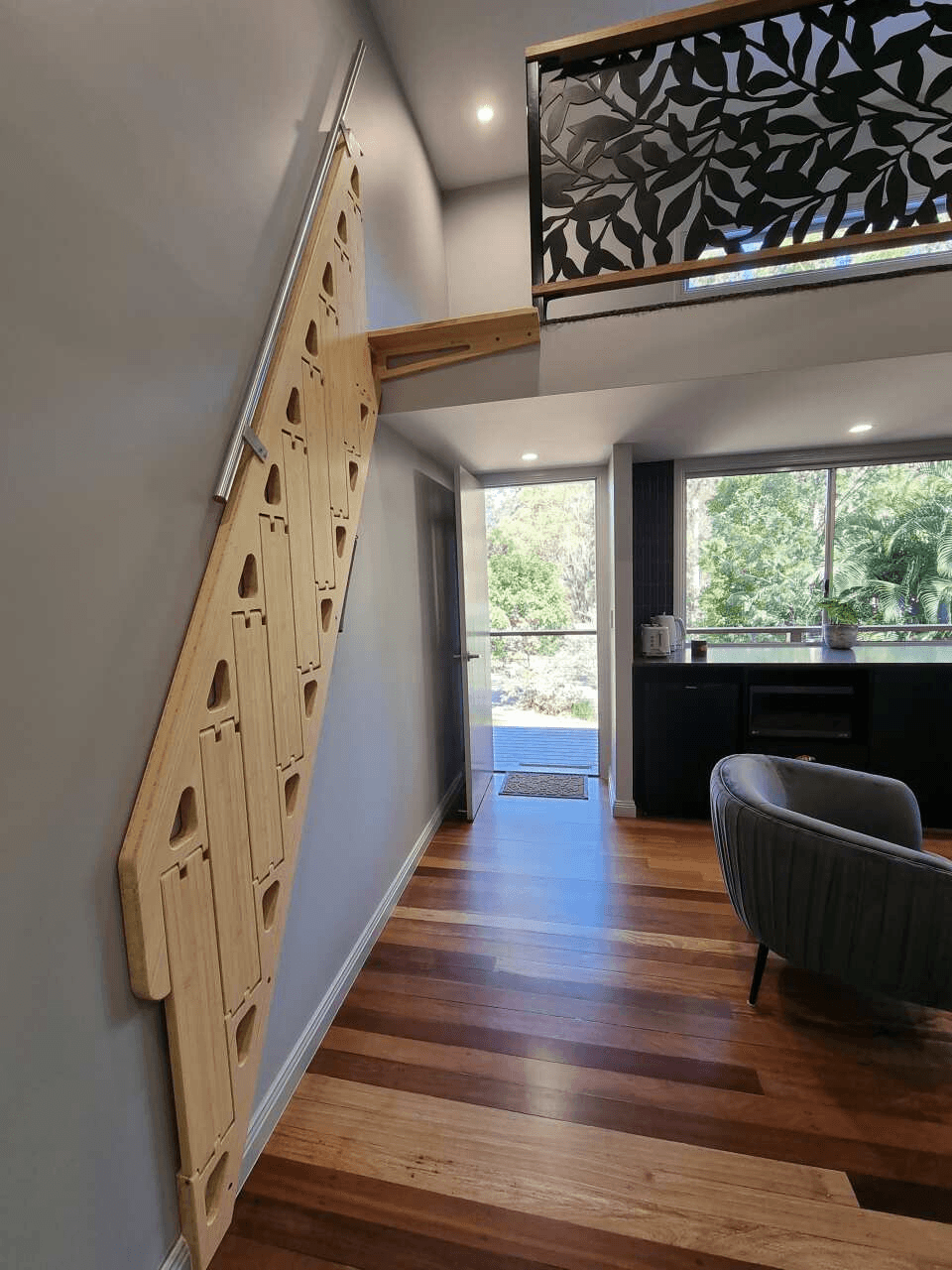
Bcompact’s FAQ notes their ladders are typically a steeper angle (60–70 degrees) with fewer treads than the stair version, making them well-suited where you have limited run length and need a compact solution.
Which material is best: bamboo, hardwood, or metal?
Materials matter because access systems face body weight, movement, and repeated cycles for years.
Hardwood
Hardwood can look beautiful, but it’s often significantly heavier than bamboo. In a folding system, extra weight can make the ladder feel more cumbersome and can increase load demand on mounting points.
Bamboo
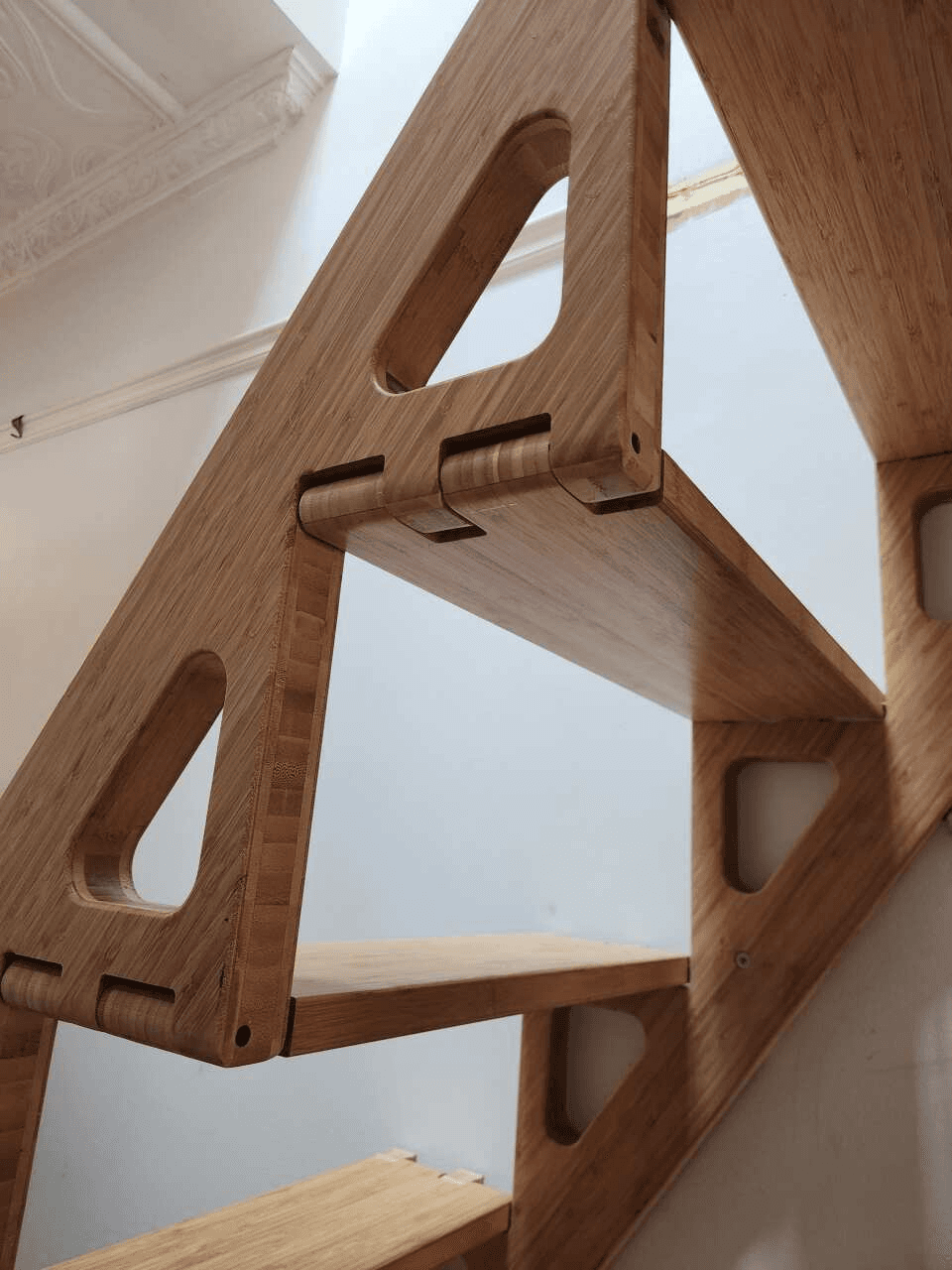
Bamboo hits a sweet spot for small spaces: warm aesthetics, great strength-to-weight characteristics, and a clean modern feel. Bamboo’s high tensile strength is one reason it’s often valued for applications where longevity matters (when engineered and finished correctly).
Metal
Metal can be durable and practical, but can feel colder visually in living spaces, and can be less forgiving in a design-led interior.
Bcompact also highlights their use of non-ferrous metals to help prevent rust and corrosion (particularly relevant for products originally designed with outdoor durability in mind), which can help extend the working life of hardware over time.
Mechanisms explained: side-fold vs pull-down vs multi-hinge
Not all “folding ladders” fold the same way — and the mechanism matters as much as the material.
Side-fold: folds flat to the wall; excellent when floor flexibility matters.
Pull-down (ceiling): folds down from the hatch; needs clear space below to deploy.
Multi-hinge / concertina: can pack away compactly, but may feel less stable/comfortable depending on tread design and hardware.
Within side-folding systems, you may also see different fold styles. For example, Bcompact notes their ladders are available in Fixed-Top-Step and Full-Fold designs, with the Full-Fold eliminating the fixed top tread so the unit folds seamlessly along its full length for a sleeker stored look.
Safety features to prioritize (especially for living spaces)
If the ladder will be used more than “once a month”, prioritise safety and everyday confidence.
Must-haves
Tread grip (non-slip surfaces are your friend)
Secure lock/catch in the open position
A secure stored position (so it doesn’t move when folded)
Strongly recommended for many homes
Handrails (particularly for kids, older users, or daily up/down use)
Locks for added peace of mind (especially in family homes)
Bcompact’s configurator explicitly lets you add extras like finishes, handrails and locks, so you can build the ladder around who’s using it, not just the measurements.
One more usability factor: many people prefer an access system that can be managed from either end. Bcompact’s innovation is described as enabling opening/closing from the upper or lower end.
Custom vs prefab: which is best for your small space?
If you want “fast and straightforward”, prefab sizes can be ideal. If your space is awkward, tight, or you want the cleanest fit, custom is often the better experience.
Bcompact offers both pathways: prefab ladder options as well as custom solutions, and their website encourages using the online configurator to tailor a ladder or stair to your space and style.
What to measure before you buy
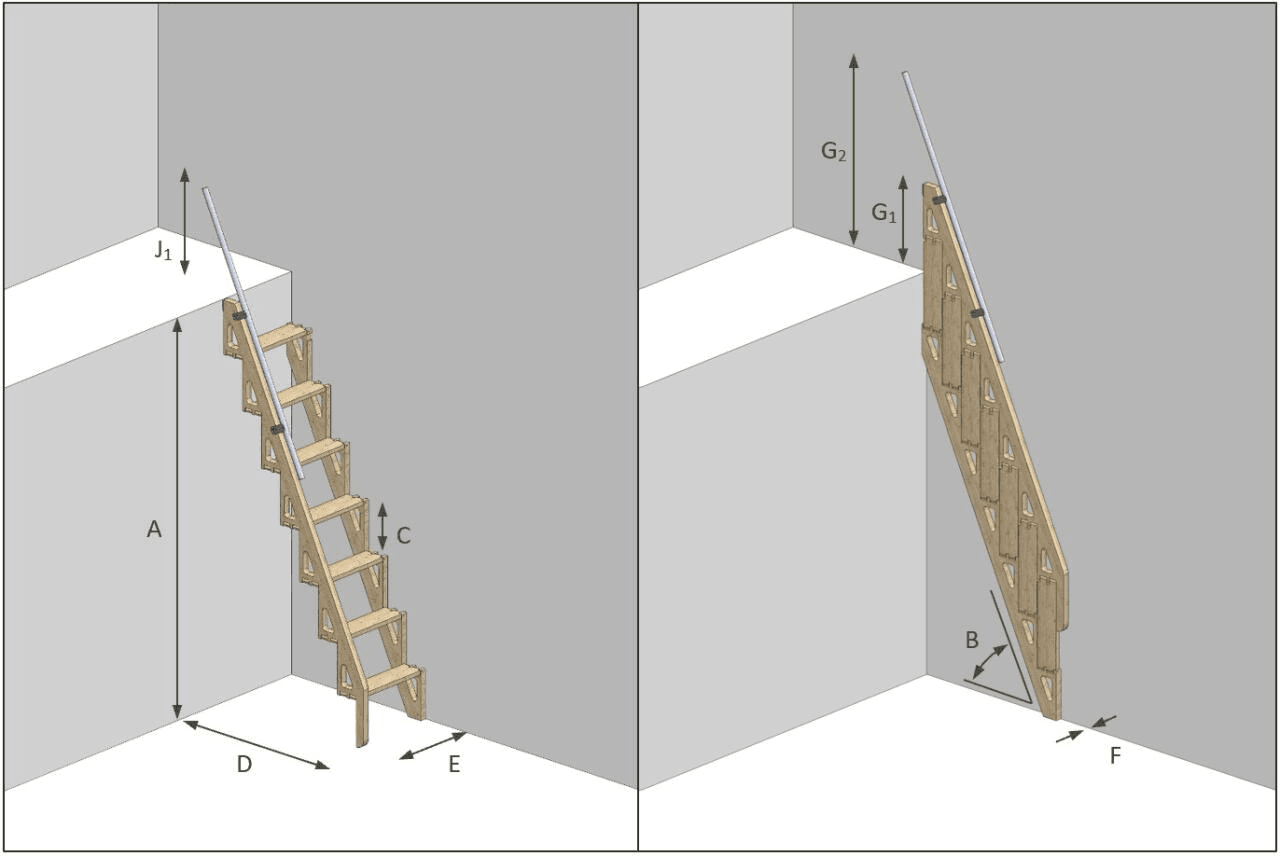
Floor‑to‑floor height (finished floor to finished floor).
Opening/landing location at the upper level (where you step off).
Clearance zone on the lower level (doors, furniture, walkways).
Wall structure and fixing points (your builder/installer can confirm).
Taking these measurements early saves time and reduces back-and-forth when selecting models and options.
Use cases: when a folding ladder makes the most sense
Daily loft access in a tiny home (sleeping lofts, storage lofts).
Mezzanine offices and studios where floor flexibility matters.
Hallways where you want attic access that doesn’t dominate the space.
Garages or workshops where you want a tidy, fold-away solution.
If access is frequent and the ladder will be ‘seen’, aesthetics and comfort become just as important as function
Installation & maintenance notes (keep it simple)
Always follow the relevant product datasheet and guides during planning and install.
Keep moving parts clean and periodically check fasteners for peace of mind.
For bamboo surfaces: wipe with a soft cloth; avoid abrasive cleaners.
For outdoor applications, 6-monthly maintenance is required.
Why Bcompact is different
Patented side‑folding design leadership (original inventor, worldwide patents).
Australian family-run design and manufacturing.
Bamboo aesthetic that suits modern interiors and small-space living.
A smoother selection process via their online configurator, where you can visualize dimensions, options and add-ons like handrails/locks/gates/stains.
If you’re weighing up folding ladder options for a small space, start with your floor-to-floor height, a quick photo of the access wall, and a note about left-fold vs right-fold preference.
From there, you can explore Bcompact’s folding ladders range, or use the online configurator to build a tailored solution (including safety add-ons like handrails and locks) and move forward with confidence.